The following is a list of free interactive games that focus on Earth Day concepts of taking care of the environment, cleaning up litter or recycling.
Clean Up Your World
Every Day is Earth Day
Clean Up the Park
Free the Beach
Dora's Mermaid Adventure
Monday, March 30, 2009


Saturday, March 21, 2009
Spring Babies PowerPoint

My classroom has the luxury of being equipped with an ActiveBoard. I am planning on using this powerpoint to teach new vocabulary about spring babies. If you don't have a projection screen, Smart Board or ActiveBoard; you can just print, laminate and bind the book for use at circle time or in your library center.
You can download the book here.
Friday, March 20, 2009
Free Printable Emergent Readers
On one of my yahoo groups there has recently been a thread talking about sight word readers.
There are many free resources available on the web.
Here are a few:
Carl's Corner
(Kindergarten emergent readers)
Samples from Reading A-Z
(a few free samples, for $50ish access to all of their books)
Hubbards Cupboard
(40 or so free printable books)
Make Learning Fun
(not all sight word based, but a lot of emergent themed printables)
Mrs. Meacham's
(awesome page with printables and more links)
Kinderprintables
Marcia's Lesson Links
Mrs. Jones Room
(lots of links to many other resources)
http://www.childcareland.com/free.html
(scroll through and look for "book" in the item descriptions)
http://mrskilburnkiddos.wordpress.com/reading/sight-words/
(scroll down, there are links to books she created in the middle of the post)
There are many free resources available on the web.
Here are a few:
Carl's Corner
(Kindergarten emergent readers)
Samples from Reading A-Z
(a few free samples, for $50ish access to all of their books)
Hubbards Cupboard
(40 or so free printable books)
Make Learning Fun
(not all sight word based, but a lot of emergent themed printables)
Mrs. Meacham's
(awesome page with printables and more links)
Kinderprintables
Marcia's Lesson Links
Mrs. Jones Room
(lots of links to many other resources)
http://www.childcareland.com/free.html
(scroll through and look for "book" in the item descriptions)
http://mrskilburnkiddos.wordpress.com/reading/sight-words/
(scroll down, there are links to books she created in the middle of the post)
Monday, March 9, 2009
Memorable Moment #6..Perspective..
 "It's all a matter of perspective."
 I can't remember who said this or where I heard it first, but this week this was certainly proven to be true.
Think about the following scenario from the point of view of the teacher, then think about this scenario from the point of view from the parent.
My friend has a four year old little girl in her self-contained special needs pre-k class. This little girl has developmental delays in the communication and social/emotional domains. We'll call her Lilah.
We were out on the playground and Lilah comes running over to tell the teacher that Billy was climbing up the slide. Her teacher told her thank you for telling me and called Billy over to talk about safety. If someone is climbing up the slide and someone is sliding down the slide, they could crash and get hurt. We always slide down the slide.
What seemed like two minutes later Lilah comes running back and says Bobby is climbing up the slide. The teacher has another discussion, this time with Bobby.
Low and behold, what seems like two minutes later, Lilah, herself, is climbing up the slide. Lilah had a talking to.
My friend wrote a note home telling mom about Lilah tattling on things that were mistakes and then copying the very same mistake. (My friend was rather frustrated...the little girl had clearly known that climbing up the slide was a mistake.)
Lilah's mom wrote a note back. It went something like this: "I am so proud of Lilah. She is talking so much more and noticing other kids more and more. She's finally doing things that other 4 year olds do. Thanks for all you've been teaching her."
Wow! Something that was frustrating to my friend is proof to the child's mom that the child is making progress.
Perspective.........maybe sometimes we need to look at things from a different point of view. When Lilah's mom wrote that note back, we all sat back for a second and then laughed. The lady's got a point! Four year olds tattle and four year olds push the limits. How nice it was to be gently reminded that sometimes frustrating behavior is typical! :-)
Sunday, February 15, 2009
Time/Portfolios...How do you balance?
 I'm finishing my last class for my Pre-K Disabilities Endorsement. This week our discussion has been centered on portfolio construction. There are two common threads upon which most of my classmates agree:
1) Portfolios are a great way to document student growth.
2) Constructing portfolios takes an enormous amount of teacher time.
In the class I teach at the community college, I am constantly telling my students to ask themselves "So what?" We've learned a new concept. We've been reminded about something we already know, but haven't been implementing. So what? My purpose is in asking them "so what?" is to get them to think about the action component. We can learn many new ideas, but if we don't apply the concept or the theory to our practice, then so what?
So here's my "so what" about portfolio construction.
By no means do I think the students in my class have the greatest portfolio, there are always things at the end of the year that I wish I had done, but my assistant and I are getting better at it each year. The trouble with portfolios is that they are so vague. We have CARE portfolios, work files and portfolios...what goes where and what information is important? How do you categorize information? How do you access information needed daily? Where do you keep it?
I currently have three systems that I think help me organize my data.
1) The student's portfolio (This is 4 inch three ring binder. We put plastic page protectors in it at the beginning of the year. We add work samples inside the page protectors as the year progresses.)
2) The student's work folder (This is a file folder in my desk drawer.)
3) My anecdotal record book (This is a smaller 3 ring binder with page dividers. Each student has a section. I keep this behind my desk so I can easily pull it out at any point in the day and jot down an anecdotal or other data.)
Between the work files, the anecdotal record book and the portfolios, we usually have pretty good examples of the student's skill development and continuing challenges.
Here is the list of things that I keep in my student portfolios:
1)Digital pictures of classroom activities glued to construction paper. The child chooses a picture and then tells about the activity for a language sample. (we do approx 1 per month during small group time...by the end of the year I typically have 8-10 language samples)
2)Self portrait (one at the beginning of the year one at the end...again done during small group time)
3)Work samples from units (we pick 4 units from the year and keep 2 or 3 samples from each of the 4 units. Out of the two or three samples, the student then chooses one of them to talk about/reflect on. We end up with a total of 4 pieces for their student led conference.)
4)Any random/miscellaneous piece that I think really showcases skill development (i.e. one girl was drawing picture about a recent field trip to Mote Marine. I asked her if she could write the sounds for the pictures she was writing she wrote "stnra" and "rjn" (stingray and urchin)...I wasn't planning on keeping that piece when we started the activity,but for her I did because it was such a great example of her writing development. Another boy made the coolest picture of a robot by cutting and gluing scraps when we were making collages. I didn't plan on keeping his when we started but it was such a neat showcase of his fine motor and visual spatial skills that I kept his.)
In work folders I keep the following:
1) Brigance data (This is the assessment inventory that my district is currently using.)
2) Daily reports if the child has one
3) Any notes from home/school
4) Any discipline/referral documentation
5) Copies of IEPs and quarterly progress reports
In my anecdotal record book I keep:
1) Anecdotals (running log from day to day, I file these in the work file at the end of the year)
2) Any RtI data and intervention forms (when we go to CARE I pull the documentation and put it in my work file)
3 things help me the most with portfolios/work files.
1) My assistant rocks! I give her a list of the things I want in the portfolios and approximate time frames and she helps to remind me....we haven't done a language sample in a while, we don't have anything in the portfolio for this unit, etc. She also helps me file work samples during nap time when we have one of those rare days and every child is sleeping.
2) We schedule structured small groups every Tuesday and Thursday so if I need something for the portfolio we can build it into small group lessons during the day.
3) I almost always take at least some portion of my planning time. Pre-k teachers seem to always end up fighting for their plan time. Some teachers don't take it and some teachers can't take it. We need it. I build it into our schedule and take at least a portion of it almost every day. This is when I can look at work samples, file daily reports, write progress reports etc.
What do you include in your portfolios? What systems do you use to help you keep up with the work load? I'd love to hear others' ideas on how to keep authentic examples of student work in practical ways for teachers!
Tuesday, January 27, 2009
The Bamboo Story and Positive Behavior Support
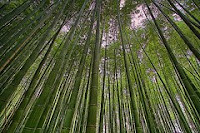
 I'm currently involved in an intensive Positive Behavior Support (PBS) training. Yesterday was the first day of our training and the facilitators were laying the foundation and the ideas that improving challenging behavior and creating a classroom climate for emotional literacy often takes a long time. There are no quick fixes.
This reminded me of the Bamboo Story. A collegue gave me a copy of this story quite a few years ago. It was hanging behind my desk as a gentle reminder for my assistant and me. I have no idea what happened to it. It probably fell down at some point and accidentally got thrown away. I've tried to find the same story online, but to no avail. Here is what I remember and the message I took from the story I received so long ago.
The Bamboo Story:
Once upon a time there was a farmer who planted some bamboo seeds. Each day he diligently cared for his bamboo seeds in the hope that he would see the fruits of his labor in wonderful bamboo growth.
The first year passed with daily care. And yet nothing happened. No bamboo sprouted.
The farmer was undaunted. He continued his daily watering, weeding and care of his bamboo seeds.
The second year passed and nothing happened.
At this point the farmer was beginning to feel discouraged. He had consistently worked; nurturing and caring for his bamboo seeds, and yet he saw no growth.
The third year passed and suddenly his bamboo was growing a foot each m onth. By the end of the year his bamboo was over 12 feet tall! Finally, the farmer had evidence of his growth.
 onth. By the end of the year his bamboo was over 12 feet tall! Finally, the farmer had evidence of his growth.
So the question is, did the bamboo grow 12 feet in that final year when the growth was evident and measured? Or did the bamboo grow 12 feet in 3 years through the daily care?
It is said that during the first two years the bamboo IS growing. It is said that the bamboo is growing roots below the ground that are a foundation strong enough to support the future growth spurt. It is said that growth was occuring as the farmer was caring for the seeds, the farmer just couldn't see it.
My recent training in PBS strategies made me think of this story again. Often it takes a long time for children with challenging behaviors to demonstrate skills of regulating their own behavior, resolving conflict or problem solving.
So as we begin our journey with positive behavior support, we as teachers must persist as the farmer did. Continually providing the daily care and nurturing of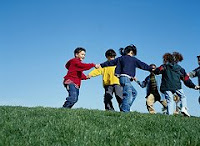 our students' emotional literacy. Those students may leave our classrooms without us seeing evidence of their growth. But perhaps, they grow by leaps and bounds one year. Perhaps those years of daily care including work on emotional vocabulary, directly and indirectly teaching social skills and providing support was a foundation for that growth. And perhaps the child's skills grew over the course of several years, but we just saw evidence of it in one.
 our students' emotional literacy. Those students may leave our classrooms without us seeing evidence of their growth. But perhaps, they grow by leaps and bounds one year. Perhaps those years of daily care including work on emotional vocabulary, directly and indirectly teaching social skills and providing support was a foundation for that growth. And perhaps the child's skills grew over the course of several years, but we just saw evidence of it in one.
Monday, January 12, 2009
Block Play
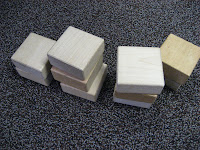
Today was a great day. Not only did I get to hear Ron Clark speak this morning, but this afternoon, my assistant and I actually finished a project that has been on our to do list for two years. Hooray for us!
We have have been wanting to create a book that will provide visual support for children playing in the block area.
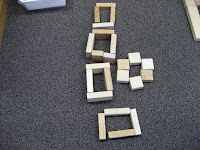


We have a few students who have difficulty figuring out what to do and how to play in the block area. Often one of us will play with the students and help them make choices and decisions. But just as frequently, we are working in other areas of the classroom and students are independently playing in the block area. By creating the book, we are hoping to make the area more accessible to more students.
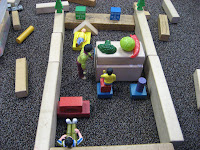

We started off with the resource book "Beyond Centers and Circle Time." There is an excellent section on "Construction Play" that includes an observation scale of simple to complex block structures.
We used this scale to reproduce some similar structures using our classroom materials. We tried to create structures of varying complexity so that children of varying ability levels could use the idea book. We then took pictures with our digital camera and uploaded the images to a PowerPoint. The book was then printed, laminated, bound and placed in the block area. You can download our book here.
We also only used a few pictures within the book. The concept of the book is to help the child get started, not to dictate or direct his/her play. (The pictures on the right are a few that we used in the book.)
Since we haven't used it yet, I'll have to update you on the level of success. Hopefully, we can teach our students how to use the book and then increase levels of self directed play and independence.
Saturday, January 3, 2009
File Sharing and Visual Supports
A few people have mentioned that they are interested in seeing some of the resources that my friend Shannon and I used when we presented our workshop session at the Florida Council for Exceptional Children Conference.
I have uploaded a few of them at 4shared.com.
FCEC Visual Supports PowerPoint
Instructions for Make It/Take It items.
First/Then
Independent Goal Templates
Rule Board
I have uploaded a few of them at 4shared.com.
FCEC Visual Supports PowerPoint
Instructions for Make It/Take It items.
First/Then
Independent Goal Templates
Rule Board
Learning Treasures
Belinda Mooney recently wrote a post about sharing blogs.
If you have clicked on any of the links that I have included in my Pirate Lessons post, you may have already seen some of the great ideas and materials that she posts on her websites.
If you're looking for printables or ideas check out her site, Learning Treasures.
If you have clicked on any of the links that I have included in my Pirate Lessons post, you may have already seen some of the great ideas and materials that she posts on her websites.
If you're looking for printables or ideas check out her site, Learning Treasures.
Wednesday, December 17, 2008
Visible Thinking
I learned about creating visible thinking routines at an early childhood International Baccalaureate conference I attended in 2007. I immediately saw the value of these routines and slowly began to implement some of them with my pre-k students. In a nutshell, using a visible thinking routine structures a lesson so that children can make connections and reach higher levels of thinking about a given topic.
Hands down, my favorite visible thinking routine is I See, I Think, I Wonder. This routine encourages students to make observations and connect their thinking and questions to the observations they have made.

I have created some very simple visual supports with Boardmaker software that I tape to chart paper to create a chart to record student responses. I laminated the visuals so that I can re-use them and simply tape them to a piece of chart paper. I draw lines to create three columns and I am ready to record.
I then choose a prompt. Sometimes it is a poster, sometimes it is a page from the story we are reading and sometimes it is a set of objects that we will using to create something. I set the stage and then guide the conversation according to the routine. "Raise a quiet hand if you can tell me something you see." "Sally saw a gray cloud, raise a quiet hand if you can tell me what that makes you think." "I see a gray cloud and I think it might rain, I wonder...."
Sometimes, I don't even do a "formal" lesson with this strategy, I just model it and encourage it within conversation. For example, my fish tank in the classroom was getting algae growth on the sides. While the students were napping, I ducked off campus to pick up a "sucker fish" from our local pet store. When I came back, I put the fish in the bag, in the fish tank so it could acclimate to our water temperature. It was also a natural prompt to generate conversation and thinking when the students woke up and saw it. I just followed the thinking routine guiding their comments and observations. What do you see? What does that make you think? And then finally modeling a wonder statement (which tends to be most difficult for my students) "I wonder if our tank will change?" and encouraging them to wonder also. They watched as we opened the bag and let the fish into the tank and then we started all over again.
Hands down, my favorite visible thinking routine is I See, I Think, I Wonder. This routine encourages students to make observations and connect their thinking and questions to the observations they have made.


I have created some very simple visual supports with Boardmaker software that I tape to chart paper to create a chart to record student responses. I laminated the visuals so that I can re-use them and simply tape them to a piece of chart paper. I draw lines to create three columns and I am ready to record.
I then choose a prompt. Sometimes it is a poster, sometimes it is a page from the story we are reading and sometimes it is a set of objects that we will using to create something. I set the stage and then guide the conversation according to the routine. "Raise a quiet hand if you can tell me something you see." "Sally saw a gray cloud, raise a quiet hand if you can tell me what that makes you think." "I see a gray cloud and I think it might rain, I wonder...."
Sometimes, I don't even do a "formal" lesson with this strategy, I just model it and encourage it within conversation. For example, my fish tank in the classroom was getting algae growth on the sides. While the students were napping, I ducked off campus to pick up a "sucker fish" from our local pet store. When I came back, I put the fish in the bag, in the fish tank so it could acclimate to our water temperature. It was also a natural prompt to generate conversation and thinking when the students woke up and saw it. I just followed the thinking routine guiding their comments and observations. What do you see? What does that make you think? And then finally modeling a wonder statement (which tends to be most difficult for my students) "I wonder if our tank will change?" and encouraging them to wonder also. They watched as we opened the bag and let the fish into the tank and then we started all over again.
Monday, December 15, 2008
Interactive Holiday Sites
It's the holiday time of year! We are busy learning traditions and celebrations from around the world. With this comes many natural opportunities to build language through stories, crafts and games. Since my pre-k classroom is equipped with an ActiveBoard and we have fourth grade students who earn to come down on Thursday afternoons to be our "computer buddies," my students especially love many of the interactive games that can be found for free on the internet. 
Here are a few of our class favorites:
Make Rudolph: Visual Spatial Activity
Make a Snowman: Visual Spatial Activity
Decorate a Christmas Tree
Spin the Dreidel
Shake the Snowglobe
Design a Snowflake
Kwanzaa Puzzle
Create Fireworks for Diwali
I'd love to find a child friendly Diwali, Festival of Ligths game and a Las Posadas game. If anyone knows of a link will you post it in the comments section?

Here are a few of our class favorites:
Make Rudolph: Visual Spatial Activity
Make a Snowman: Visual Spatial Activity
Decorate a Christmas Tree
Spin the Dreidel
Shake the Snowglobe
Design a Snowflake
Kwanzaa Puzzle
Create Fireworks for Diwali
I'd love to find a child friendly Diwali, Festival of Ligths game and a Las Posadas game. If anyone knows of a link will you post it in the comments section?
Wednesday, December 3, 2008
....delays....
It's been a long time since I've posted! Sorry.
In that time, my principal retired, our new principal started, a friend and I presented a session on Visual Supports with at our state Council for Exceptional Children conference and finished an online post-grad course.
Not to mention Thanksgiving, guests in town and Black Friday shopping with my sisters.
I'll get back in the groove and update you all on the IB Safety Unit we just finished and the December Celebrations Unit we are beginning.
In that time, my principal retired, our new principal started, a friend and I presented a session on Visual Supports with at our state Council for Exceptional Children conference and finished an online post-grad course.
Not to mention Thanksgiving, guests in town and Black Friday shopping with my sisters.
I'll get back in the groove and update you all on the IB Safety Unit we just finished and the December Celebrations Unit we are beginning.
Sunday, October 12, 2008
Hot Pumpkin
Shelley Lovett at Childcareland has started posting YouTube videos about the lessons she teaches with the materials she creates and gathers.

This month she posted a lesson about playing a game "Hot Pumpkin" (similar to hot potato) during her large group time.
Here are the features that I think Shelley does exceptionally well with her site and her pumpkin video:
Check out more of the videos of Shelley's Lessons and explore all of the creations on her site.

This month she posted a lesson about playing a game "Hot Pumpkin" (similar to hot potato) during her large group time.
Here are the features that I think Shelley does exceptionally well with her site and her pumpkin video:
- She provides and models the materials.
- She gives suggestions for alternative materials.
- When she purchases materials, she tells where they are purchased and the cost.
- She identifies potential problems and provides cautions against them.
- She creates a lesson that can be naturally differentiated!
- She demonstrates how she differentiates with different skill levels.
- She explains how she makes her teacher decisions.
- She tells where she gets her music and offers alternatives.
Check out more of the videos of Shelley's Lessons and explore all of the creations on her site.
Wednesday, October 1, 2008
Book lists and vocabulary
Have you noticed my Shelfari shelf has changed? (You may have to scroll down the blog and look to the right hand side to see my shelf.)
I was originally playing with the features of Shelfari with the books that I read for myself. Then the Boardmaker listserve on Yahoo had a thread going about favorite books and correlating vocabulary.
That made me think.
Since this blog is really about education and educational strategies, what if I used Shelfari to organize the books that I use in my classroom? So I started playing with the features again.
Here's what I've decided so far:
I will post the book and how many stars I think it deserves for classroom use. Under the review feature (move your cursor over the picture of the book on my Shelfari shelf and you will be able to see my review), I will post:
theme/unit
age/grade level
concept
vocabulary words
I will try to have a blog post with a list of all of the books in a particular theme.
Since I'm still in the "playing with the features stage,"
I reserve the right to change my mind. :-)
I was originally playing with the features of Shelfari with the books that I read for myself. Then the Boardmaker listserve on Yahoo had a thread going about favorite books and correlating vocabulary.
That made me think.
Since this blog is really about education and educational strategies, what if I used Shelfari to organize the books that I use in my classroom? So I started playing with the features again.
Here's what I've decided so far:
I will post the book and how many stars I think it deserves for classroom use. Under the review feature (move your cursor over the picture of the book on my Shelfari shelf and you will be able to see my review), I will post:
theme/unit
age/grade level
concept
vocabulary words
I will try to have a blog post with a list of all of the books in a particular theme.
Since I'm still in the "playing with the features stage,"
I reserve the right to change my mind. :-)
Sunday, September 21, 2008
Teaching Rhyming
One of my listservs has been pretty active lately on the topic of teaching rhyme. It has been an interesting topic, because the person interested in ideas has already tried many strategies to help her particular student master the concept.
So it made me think...how many different strategies and different materials would help teach the concept of rhyming.
Ideas for parents and teachers about how to teach rhyming:
Rhyming at Succeed to Read
Rhyming Ball Game
Rhyme Time
You Tube: Teaching Rhyme with Songs
You Tube: Teaching Rhyme
Free Downloads for teaching rhyming:
Using Nursery Rhymes: Free Printables
Raffi: Down by the Bay Song
Kelly's Kindergarten Rhyming Pictures
Erase A Rhymes
More Erase A Rhymes (scroll down 2 or 3 sections)
Free Online games/videos for practicing rhyming:
You Tube: Chicka Chicka Boom Boom
You Tube: Sesame Street "et" Rhyme
You Tube: Becka and the Big Bubble
Interactive Game: Oobi Rhyme
Interactive Game: Gus and Inky Rhyme
Interactive Game: Rhyme Time Picture Match Up
Interactive Game: Scholastic Reggie Loves to Rhyme
Interactive Game: Elmo Rhymes
Products to purchase:
Jack Hartmann: Shake Rattle and Read
Lakeshore Rhyming Books
Lakeshore Rhyming Tubs
Super Duper: Rhyme Deck
These are just a few of the many resources that are out there. Have fun exploring!
So it made me think...how many different strategies and different materials would help teach the concept of rhyming.
Ideas for parents and teachers about how to teach rhyming:
Rhyming at Succeed to Read
Rhyming Ball Game
Rhyme Time
You Tube: Teaching Rhyme with Songs
You Tube: Teaching Rhyme
Free Downloads for teaching rhyming:
Using Nursery Rhymes: Free Printables
Raffi: Down by the Bay Song
Kelly's Kindergarten Rhyming Pictures
Erase A Rhymes
More Erase A Rhymes (scroll down 2 or 3 sections)
Free Online games/videos for practicing rhyming:
You Tube: Chicka Chicka Boom Boom
You Tube: Sesame Street "et" Rhyme
You Tube: Becka and the Big Bubble
Interactive Game: Oobi Rhyme
Interactive Game: Gus and Inky Rhyme
Interactive Game: Rhyme Time Picture Match Up
Interactive Game: Scholastic Reggie Loves to Rhyme
Interactive Game: Elmo Rhymes
Products to purchase:
Jack Hartmann: Shake Rattle and Read
Lakeshore Rhyming Books
Lakeshore Rhyming Tubs
Super Duper: Rhyme Deck
These are just a few of the many resources that are out there. Have fun exploring!
Subscribe to:
Posts (Atom)