Showing posts with label social skills. Show all posts

Saturday, September 12, 2020

Covid19 Adjustments for Preschool Housekeeping Center

 We have just finished our first two weeks of school with all of our new re-opening policies for safety, disinfecting, and social distancing.  It's tough!  Last year I started my preschool special needs class with 15 students and ended my year with 17.  This year with all of our new policies, I am so thankful for lower numbers.  We currently have 7 children in the classroom and 4 remote learners that I teach concurrently through zoom lessons for circle time, small groups and therapies.

My last post showed the adjustments we made for our block center.  This center worked great from day one!  The reduced choices, the reduced visual "clutter" by removing the ABC rug, and simple visual supports from the painters tape and Lesson Pix symbols really helped this center to be successful.

Our housekeeping center is functioning well after two weeks of adult support.  Remember, my district has a policy for limiting shared materials, disinfecting after each use, all students must wear masks, and we must attempt to social distance to the best of our ability.  The housekeeping center isn't great for social distancing!  The kids naturally want to play together and be in close proximity.  Most years, this is exactly what we are hoping for, however, as we all know, this year is a bit different.  I wanted the kids to continue to have opportunities for pretend play and natural conflict resolution, but I still have to adhere to my district policies.

We decided to remove the small table and chair set that we typically would have in the housekeeping center.  This created more floor space for distancing.  We also removed many of the props including all of our dress up clothes.  We decided to limit the center to 2 children (typically we would have 4 children playing here) and set up the center as a "store" for our first few weeks.  We have two shopping carts, two cash registers, two sets of keys, and sets of food.  We have enough these categories of toys to either disinfect quickly after each use or rotate toys with our rotation system.


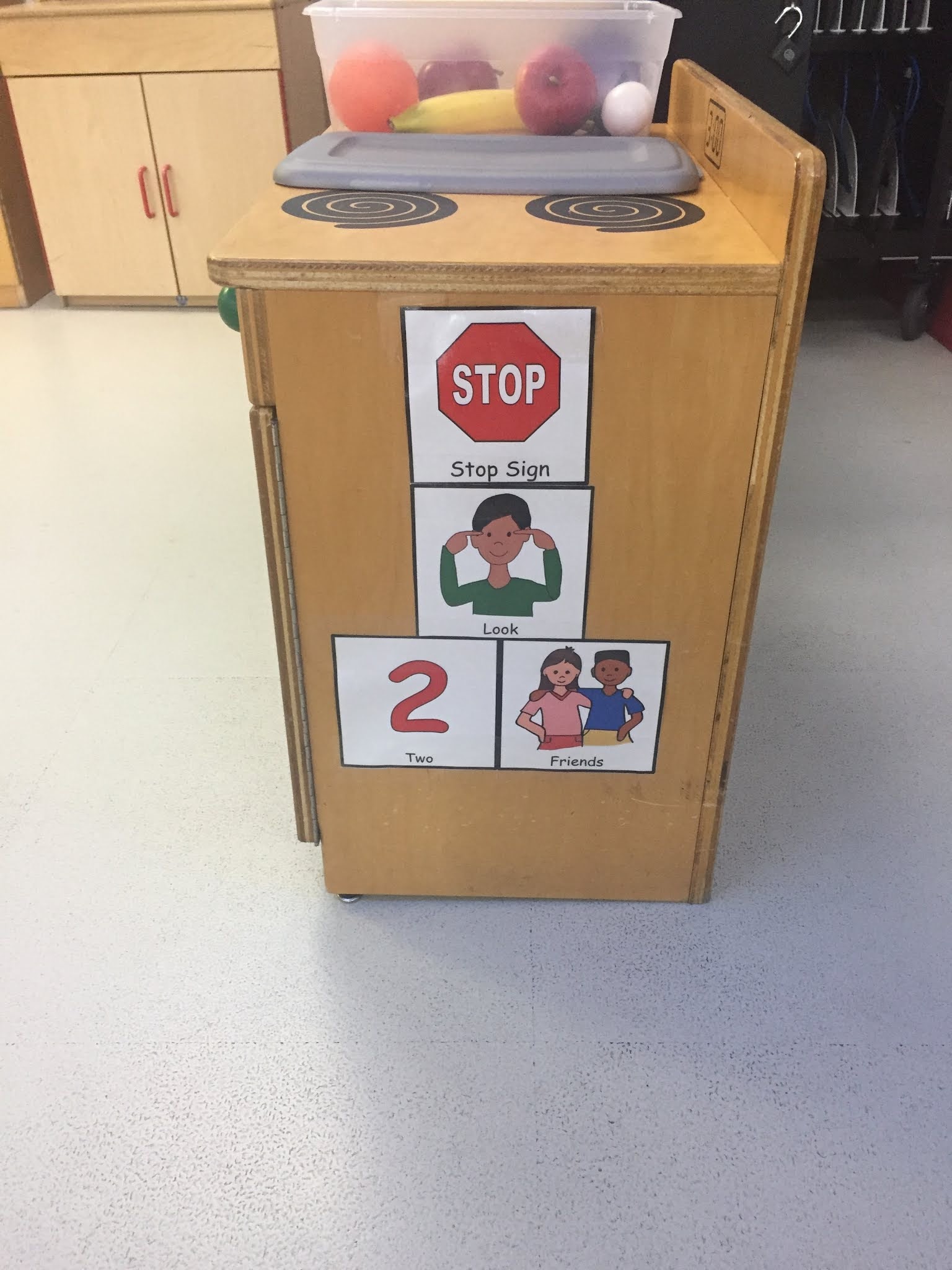


It took a LOT of support initially and I still don't love it.  But at this point, I have not figured out a different way to provide the students with the play opportunities and adhere to the district guidance plan.  So I can live with it.  The students are playing, they are talking and solving problems through the "trade" solution, the "timer" solution, and the "wait and take turns" solution.  Our "solution board" visuals can be found for free at the CSEFEL site under their practical strategies section.  I'll show photos of this in another post!  At this point in time, I feel like this option is at least allowing us to continue with developmentally appropriate play and natural opportunities to work on our social emotional goals.

Tuesday, July 14, 2015

Sensory Bin: Left Over Rice Krispies

Our local grocery store sucked me into buying two boxes of Rice Krispies when they were buy one get one free a few weeks ago.  Two pans of Rice Krispy treats later, I swore I was not going to make any more that I would then eat!

I decided to turn the leftovers into a very simple sensory bin for my two year old nephews.  I simply added the Rice Krispies, some sea life manipulatives from Lakeshore, and some left over small containers from individual applesauces.  Cheap and easy!


Since they are two years old, I made one bin for each of them as sharing and turn taking can still be a bit of a challenge at times.  They both started off in their own bins finding sea life, exploring the textures, and scooping the Rice Krispies with their hands into the applesauce containers.

Then something wonderful emerged!  They gravitated towards each other and playing together in one bin.  Scooping, pouring, filling, dumping, exploring and giggling.


Saturday, May 30, 2015

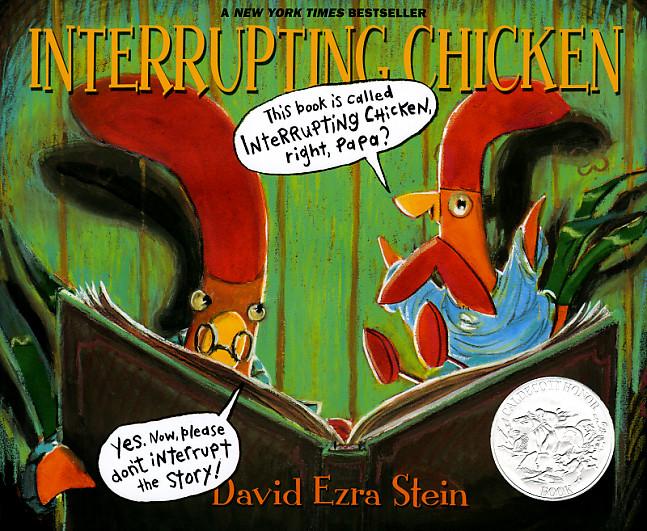
Interrupting Chicken: A Social Skills Lesson

Last week one of our social skills lessons started with a read aloud of "Interrupting Chicken" by David Ezra Stein.

This is a great book to help children learn about controlling those impulsive moments of wanting to interrupt or blurt out during our whole group time.


We completed our read aloud, had a class discussion and then also completed some activities similar to those found at Happy Teacher, Happy Kids.

I can also be a little bit goofy and I want our social skills lessons to be fun, so the kids can really practice the skills and enjoy the results of prosocial behaviors.  Not just dread one more lesson with a bunch of rules that are hard for them to follow.  So as a result of my Pinterest addiction, I found a link to "Chicken Names" from Tilly's Nest and thought it would be fun to pair with this book.


The rules of the activity were pretty simple.  We were going to practice NOT being interrupting chickens.  If we could work on that, we could make a list of everyone's chicken name.  (I'm Yolko Scrambledore, by the way.)  It was fun.  One of the little girls in my class has the same birthday month as my assistant so she dubbed my assistant as her "Chicken Cousin."

There is also a YouTube video that has a read aloud.  I like to use the videos in addition to my read aloud because it gives my students one more way to access the text.


With a simple Google search, you can find many, many online resources and ideas that support this book.  These were just a few of the ones we used.


Thursday, November 6, 2014

Funny is Funny

I've worked with the paraprofessional I am assigned with for the last four years.  She is amazing.  Every year within one of our social skills lessons we talk about things we like and don't like.  This leads us into how different people have different opinions.  Which in turn leads us to lessons on respect, caring  and tolerance.

Every year, my para tells the kids how she does not like frogs.  We live in Florida.  Once during the rainy season, she was laying on her couch reading her book and a frog that got into her house jumped on her face.  She tells the story and the kids laugh but for the most part understand why she doesn't like frogs anymore.

This year I have a little girl who is very bright and on the autism spectrum.  She and I do a lot of social stories to help her learn new skills.  Her mom sent me this link because Mrs. B.  (my para) has to watch this video.  According to our student  "we can teach her to like frogs again.  They're not bad.   They can be our friends."

We cracked up laughing when we watched the link.


Sunday, August 31, 2014

Fair vs. the Same

This summer, I came across this visual on Pinterest. To me, this shows why we assess and plan for individual differences for our students.

What is FAIR is not always the SAME thing for everyone. At the beginning of the school year, my class has a meeting and we generate our class rules. We call these "agreements" (and sometimes for little kids I call them "promises.") The students agree to follow the rules we generate. Then my assistant and I make agreements with the class too. One of our most important agreements is to help make things fair.

I find the concept of fairness to be one that even my youngest three year olds could understand. When the adults promise to be fair, it sets the stage nicely for differentiating your lessons according to your data. When someone asks me why something is different for one person or one group, I simply reply "Because I promised you all that I would help make things fair; and you have what you need right now, and so do your friends."

Clearly the boy who is tall doesn't need a box to stand on (even if he wants one) and clearly the child who is the shortest needs 2 boxes if he is going to be able to see the game. What is fair, is not always the same thing for everyone.


My Pinterest link led me back to this post by Phil Artman. He found it on Facebook and could not determine the original writer.  If it belongs to you and you do not have a "noncomercial share alike" aspect to it, please leave a comment and I will remove the post.

Monday, August 4, 2014

Chapter Book Read Alouds 2nd and 3rd Grade

My class loves to listen to me read to them.  Since my students are 2nd and 3rd graders now, I like to try to expose them to chapter books as read alouds.  The following is a list of some of the books we read this past year with some brief comments about each.


1) Boxcar Children #1


I chose this book because it was one of the extended complex texts that was recommended to go with our first unit with our reading curriculum, Wonders.  The students liked it and enjoyed the adventure of the children living in the train boxcar.


2) Stuart Little

"Stuart Little" was our next read aloud because of a play we were scheduled to see.  My district is very fortunate to have a lot of support for education for children within the arts.  Part of that is experience at our local theater for live performances.  "Stuart Little" was actually a very difficult book to read to my students. The language and vocabulary that is used actually puts it much higher than a second or third grade level (I think it's more like 5th or 6th grade.)  However, my students loved the story.  We  went through this book pretty slowly and stopped to explain a lot of the words or phrases in the book.  By the time we got to the play, my class loved that they could "see" parts of the story they already knew and we had great discussions about the parts that were different.


3) Horrible Harry and the Drop of Doom

Horrible Harry has a great series of introductory chapter books.  I read this book to my class to introduce Harry and Song Lee to my students.  I have found that once students are familiar with some of the characters they are more likely to make the transition between picture books to chapter books.


4) Santa Clause Doesn't Mop Floors
We read this book as a purely enjoyable read at the holidays.  As we progressed through the story, we had some great conversations for our social skills lessons.


5) The One and Only Ivan
Oh! How I loved this book.  The story is told from Ivan's point of view.  Ivan is a gorilla that was once wild and is now kept in captivity in a shopping mall.  My class loved hearing about Ivan's thoughts and feelings and solutions.  They also loved learning that the story was based on a real gorilla.  This gave us the chance to talk about what they phrase "based on a true story" means (how often the main idea and the theme of the story stay true but frequently the author changes some of the details to make the plot of the story work.)  **This was my favorite read aloud this year.


6) Little Dog Lost
We all enjoyed this story too.  It is written in the style of a poem, even though it is also presented as a chapter book.  This was the first time my class had seen a free verse poem this long.  That was a great way to show them there are many different ways a writer can share their thoughts and ideas with the reader.


7) How to Eat Fried Worms
If you have read any my previous post about "How to Eat Fried Worms," you will know I love this book.  I first was introduced to it when MY second grade teacher read it out loud to my class.  I remember simultaneously loving it and being grossed out by it!


8) Charlotte's Web
My students loved this book...well except for the one who hated it and the one that it stressed out (but she still loved it!)....For more information on this read here.  Overall though, the class really did like this classic!  This was a novel that we had plenty of copies of throughout our school.  I was able to get a copy for every student in my room and the liked tracking our progress in their own book as I read it to them.   We ended our school year with an "old school" thematic until based on this novel.  My class loved that kind of structure to our day.  I wish we could do more of it.


Photo credits:
http://www.amazon.com/The-Boxcar-Children-No-Mysteries/dp/0807508527
http://www.amazon.com/Stuart-Little-E-B-White/dp/0064400565/ref=sr_1_1?s=books&ie=UTF8&qid=1407204457&sr=1-1&keywords=stuart+little
http://www.amazon.com/s/ref=nb_sb_noss_1?url=search-alias%3Dstripbooks&field-keywords=horrible%20harry%20and%20the%20drop%20of%20doom&sprefix=horrible+harry+and+the+d%2Cstripbooks&rh=i%3Astripbooks%2Ck%3Ahorrible%20harry%20and%20the%20drop%20of%20doom
http://www.amazon.com/Santa-Doesnt-Floors-Bailey-School/dp/0590444778/ref=sr_1_1?s=books&ie=UTF8&qid=1407205160&sr=1-1&keywords=santa+clause+doesn%27t+mop+floors
http://www.amazon.com/s/ref=nb_sb_ss_i_0_14?url=search-alias%3Dstripbooks&field-keywords=one%20and%20only%20ivan&sprefix=one+and+only+i%2Cstripbooks%2C167&rh=i%3Astripbooks%2Ck%3Aone%20and%20only%20ivan
http://www.amazon.com/s/ref=nb_sb_ss_i_0_22?url=search-alias%3Dstripbooks&field-keywords=how+to+eat+fried+worms&sprefix=how+to+eat+fried+worms%2Cstripbooks%2C259&rh=n%3A283155%2Ck%3Ahow+to+eat+fried+worms
http://www.amazon.com/s/ref=nb_sb_ss_i_0_12?url=search-alias%3Dstripbooks&field-keywords=charlotte%27s+web&sprefix=Charlotte%27s+%2Cstripbooks%2C259&rh=n%3A283155%2Ck%3Acharlotte%27s+web

Tuesday, July 8, 2014

Doll House and Choice Time

At the end of the day this past year, my class enjoyed "Choice Time."

If you were to walk in my classroom, "choice time" looks remarkably similar to "free time."  I don't call it "free time" however, because the children are not "free" to do whatever they want...they have to make a choice from the leisure activities we have available and then stay productively engaged, unless they have asked permission to make a different choice.

Unproductive wandering throughout the classroom is one of my "teacher pet peeves."  It drives me crazy and I have found that unproductive wandering leads to lots of management or behavior issues. Hence, we have "choice time" and not "free time."

One of my older third grade girls wanted me to buy a Barbie doll house for them to play with during choice time.  I explained that Barbie houses cost a lot of money and we didn't have enough to buy one.  She accepted this and went on to play with something else.

A few days later while browsing on Pinterest, I came across this pin that uses a 3 ring binder to make a Barbie doll house from Southern Disposition.  Take a look.  Kendra includes lots of ideas and instructions.


How serendipitous!

When we got to choice time the following day, I asked that little girl if she would be interested in looking at a possible solution to our Barbie doll house problem.  We looked through the website and directions.  She was hooked!

I happen to have lots of scrapbook paper at home that I don't use anymore because I now do most of my photo albums digitally.  I also have a scrap craft bucket of ribbon, lace, beads, etc that I keep for projects at school.  I purchased some scraps of cheap fabric from the scrap bin at Jo-Ann's.

I also happened to know that our bookkeeper has A LOT of old binders that no one wants to use because they aren't perfect.  They were "perfect" for us because they were free!

So for about $8 for fabric scraps and some Stitch Witchery (no sew tape that fuses fabric together), we were in business!

Two girls wanted to make doll houses but they didn't really know where to start.  We talked about how sometimes people use an "inspiration room."  I asked them what colors they wanted their rooms to be.  One chose blue and the other chose pink.  We googled images of girls bedrooms.

One girl choose this blue room from Amecdes as her inspiration.


The other girl chose this pink and green and cream room from Bess.Net as her inspiration.


Our choice time lasts for 15 or 20 minutes at the end of each day.  For about three weeks, the girls spent their choice time creating, figuring things out, problem solving and adding details to their doll house.


Here's one girl making a mirror out of a file folder, aluminum foil, and lace ribbon she cut apart.


Here's her room after she covered up a granola bar box for her bed.


And here is her final product.  The curtain rod is a pipe cleaner with some blue beads we had in our craft bucket (I think they were table scatter beads from the Dollar Tree.)  The curtains are just lengths of lace ribbon she cut and then threaded onto the pipe cleaner.  The rug is a scrap of felt. We printed an image of a dresser off of another Google image search and she glued it to the wall.  The bedspread is a scrap of fabric that she cut.  I helped her make the pillows and the column of fabric that covers the 3 rings with an iron and the Stitch Witchery. (Hot irons and young children are not a good combination!)


Here is the other girl after she finished her mural and began working on her window.


And here is her final room.  She decided to make her bed a daybed.  We used a Girl Scout cookie box for this and scraps of fabric that she cut.  Her curtain rod is a pipe cleaner with some of a pearl strand that she twisted together (the pearls were is my scrap bucket.)  The curtain ties are more of the pearl strand.  The rug is a scrap of felt.  She also cut some mat board to frame her butterfly mural.  Again, I helped with the iron and Stitch Witchery of the column of fabric in the middle and the pillows.  


The two rooms together looked like this (sorry the photo is a little fuzzy!):


The girls had so much fun making their own doll house bedrooms.  They also had a lot of fun playing with them during choice time once they were completed.

I know I can't prove that they practiced their social skills or their problem solving skills and I certainly don't have any data to justify letting them spend 15 or 20 minutes every day making a doll house.  However, these little doll houses have been one of my favorite memories from the year.  To me it shows:

1) Willingness to accept and handle disappointment and the word "no" (We didn't buy their doll house that they wanted.)
2) Willingness to accept a compromise and take responsibility to follow through on the compromise
3) Ability to think in a problem solving process (Watching the one girl work for 2 days to get her mirror to stand up by itself was awesome!)
4) Ability to persist at a long term task (relatively speaking)
5) Thinking creatively
6) Using materials for another purpose other than its intended use

****One little girl is in my class for help with an emotional and behavioral disorder (EBD) and the other is in my room for  help with a severe learning disability.  I'm pretty happy with all of the skills they practiced in an authentic and personally meaningful way.

Many, many thanks to Kendra at Southern Disposition for her great idea!

Friday, June 6, 2014

Charlotte's Web

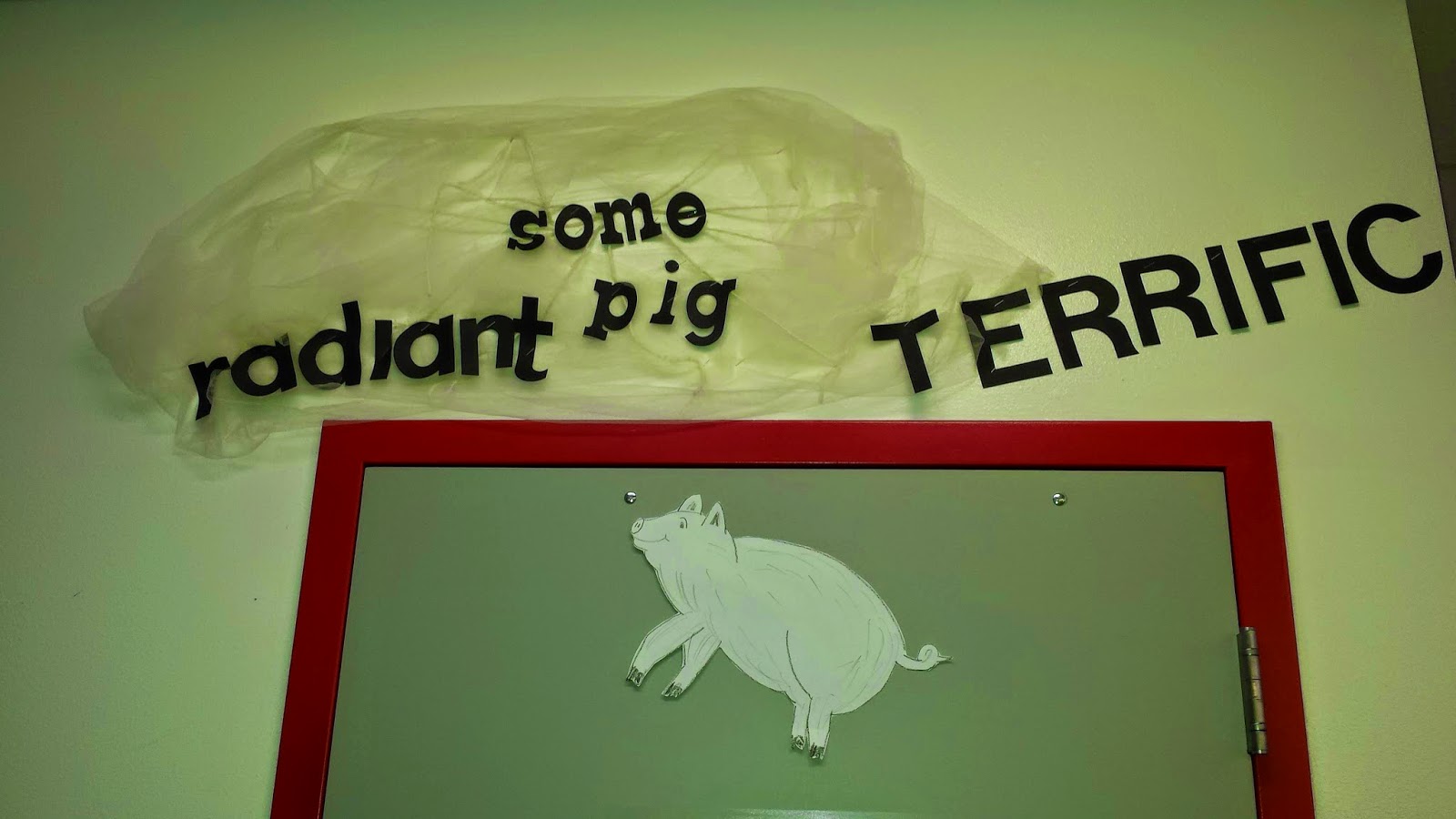
We ended our school year with a novel study.  Two of the general education teachers and I pulled together a unit on Charlotte's Web for the students.  I'm so glad we did!  After so much emphasis on our standardized testing this quarter, it was refreshing and rejuvenating to go back to great literature and helping children understand and enjoy it.

Here are a few of the lessons we completed:

1) Every student had a novel and was expected to follow along.  I hadn't typically done this in the past when there was such a difference in my students' reading skills and the level of difficulty of the text.  This sounds silly, but it was almost an "A-ha" moment for me.  The brailled book that we had was in contracted braille and Gabby is still reading uncontracted braille.  This book was too hard for her, but she was able to explore the book and track through some of the chapters when she had 1:1 support.  I have 2 students who are also still reading at a beginning first grade level.  When they were given a simple verbal prompt on when to move to the next page, they could inconsistently track with us too.

2) We completed a "following directions" lesson based on the passages in the text to map out and create the barn scene.  We added more details as we learned them throughout the book.  (The white circle is just blocking out all of the kids names.)


3) When Charlotte was finally introduced in the book, the students all picked a spider to research.  They made a spider body and were responsible for finding 8 facts about their spider.  Then they read their planning sheet and facts to me; and I helped them type it into a word document so they could cut out the facts and glue them to the spiders legs.  We started them with 3 facts: all spiders are arachnids, all spiders have 2 body parts, all spiders have 8 legs.


4) The classroom staff also made a web (tulle and yarn) for Charlotte and surprised the kids each morning with the words that she wrote in her web for Wilbur.


5) In addition to these "crafty" classroom projects, we also completed several Type 1 writing pieces about what students know about a farm, what they know about a County Fair, what they think will happen to Wilbur, why Fern wasn't paying much attention to Wilbur at the fair etc.  (Our school uses the Collins writing program.  To see more about a Type 1, click here.)


6) Two social skills lessons emerged from this novel study that I wasn't expecting.  One boy had already seen the movie so he knew what the story was all about.  One day he went home and cried.  (Talk about making me feel terrible!)  His mom sent me an e-mail to let me know what was happening.  We talked about 2 options for him: 1) Finding alternative assignments for him so he wouldn't go home crying every day.  2) Watch him closely during lessons and prompt him to take a break if he needed one.  He has very quiet but consistent clues that tell you when he is getting upset.  His cheeks get red and he starts to fidgit.  Watch for these clues and ask him if he is "ok or if he needs a break."  If he chooses a break he could go to the computer and put the headphones on and go on Tumblebooks so he didn't have to hear us.  

We decided to try the second option and mom said she would let me know if he comes home crying anymore.  If he continued to be upset at home, then I would find alternative assignments for him. On one occasion he chose to take a break but out of the 3 or 4 other times I asked him, he chose to stay with the group.  I think giving him some control over whether or not he had to listen to something upsetting made it more manageable for him.

Another little girl, who can be very loud and a bit dramatic, but is also very young and sensitive to sad situations also had a few moments when the story was upsetting.  Her plan was a bit different.  Throughout the year we have had a "safe space" set up for her so that she could manage her own behavior and de-escalate herself.  She also processes information better when she is prepared for it and it is not a surprise.  (We're working on handing unexpected situations, but for this novel with the themes of friendship and life cycles and death, I thought she still needed to be prepped.)  For her, I would warn her when a sad part was coming up and let her choose her safe space or holding my assistant's hand while we read that part.  Interestingly, most of the time in the year when she was upset, she liked to be alone and choose her safe space.  Each time within this story she chose to hold my assistant's hand.  

For these two students, I spoke with their parents about the novel and how it was affecting them emotionally. My goals in the novel study started with the literacy goals of character traits, how characters change throughout a story, remembering details, researching information, etc.  For them, my focused shifted and I really wanted the social skills practice more than I wanted them to gain the literacy skills.  However, in getting at this social skills practice, I didn't want to push them so hard that they were crying or emotionally distraught at school or home.  It was a fine line...thank goodness they both have very actively involved parents who let me know how they were doing at home too!  

I wanted the boy to learn to speak up and request a break when he felt like he was getting to the "overload" point.  While he only took the break once and he needed prompting, this novel gave me some good information to share with his teacher next year so she can continue with this.

For the little girl, I wanted her to remember that she had solutions and choices that she could use to help her manage her emotions.  I also wanted her to be able to attempt to do this without yelling and disrupting the whole group.

The novel study of Charlotte's Web was a great way to end the year.  It gave the students a great piece of literature to read, fun activities that still had an academic focus, and kept them interested and engaged at the end of the year!


Tuesday, March 11, 2014

Braille: Minute to Win It

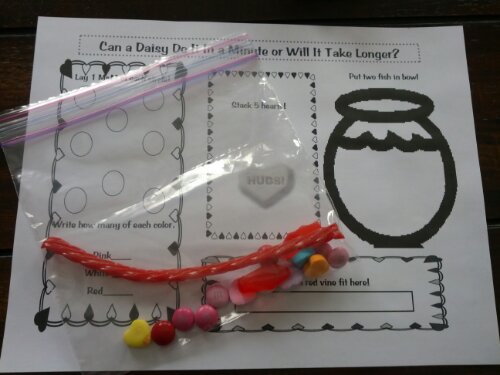
I know it's way past Valentine's Day, but hey, St. Patrick's Day is coming up.  I thought I'd share how I modified a Minute to Win It Board so that Gabby (the child in my class who is blind and has CP) could play with the class on Valentine's Day.  Maybe, this might spark an idea for someone else for a St. Patrick's Day idea or an upcoming Easter idea.

I found this board on Pinterest.  It came from Teaching Heart Blog.

image


I wanted my class to be able to play the game, but I needed to change it a bit for Gabby.  Here's what we came up with.


We just took some cafeteria straws and glued them to vellum to created a raised space for Gabby to put all of her candy items.  Then we brailled the amount and the item name so she would know what belonged in each area.  (Since Gabby has limited motor control, I also didn't have her stack or try to place things within small isolated areas.  If she got it into the right section, it counted.)  There's nothing fancy or pretty about this board, but it did give Gabby access to the game and allowed her to play! Can you tell we took the pictures AFTER she played with it and got chocolate smudges everywhere?  :-)

Finally, for the class as a whole, I told them we were going to see if we could all complete this in one minute.  If one child finished, she was encouraged to cheer on her classmates.  (I still have some very young students in my room, so I try to limit the competitive aspect of games and focus on the participation and teamwork.)

Many thanks to Colleen at Teaching Heart Blog for her awesome freebie!

Note to Colleen:  I tried to leave a comment on your original page on your blog  to ask permission if I could publish this post with attribution back to you.  For some crazy reason, it kept giving me an error message and wouldn't submit.  If this post in anyway makes you uncomfortable, please let me know I will take it down!

Monday, August 16, 2010

Positive Behavior Support: Solution Board

Throughout my district (as with many others) there is a large push for the implementation of school-wide positive behavior support (PBS). I am also fortunate enough to work in a community that has received a large grant to support strategies that increase mental health for children in early childhood settings. One of the initiatives funded through this grant is PBS training and materials.

Our early childhood PBS training is based on the pyramid model and training modules from CSEFEL.

One of my favorite strategies that I learned from my PBS training is the "Solution Kit." The solution kit is a strategy that teaches young children the options they may try when a conflict or disagreement arises. It helps them to learn how to independently (or with less prompting) solve problems.

You can watch a video of a teacher modeling the "solution kit" here.

Two years ago, I started using the solution kit with my pre-schoolers. I had a small plastic suitcase very similar to the one in the video and housed the kit at child level near my circle time area. While I loved the concept of the solution kit, I found the implementation to be difficult for my students. The suitcase with the clips was difficult for some of them to manage with fine motor deficits and the solutions all in a pile became quickly disorganized and overwhelming for them. I didn't want to give up on the positive aspects of using the solution kit, so I had to figure out a way to make it work for my population. Our solution kit evolved into a "solution board."


I simply printed and laminated the visuals from the solution kit and then taped them to the side of my desk. They became a permanent fixture in the classroom. The board allowed me to organize the solutions in a manner that was easier for my students to track visually and also eliminated the need for them to be able to open the kit. Towards the end of the year, for many of my students getting ready to transition to kindergarten, I could be across the room and just verbally prompt them to try using the solution board. I even had two parents who saw us using the solution board in the class and asked for the visuals to use at home!

I think the power of the solution board or solution kit (however the concept evolves for you) is that it teaches the children skills for managing their own conflicts. It gives children a measure of control over the resolution to the conflict and does not require an adult to intervene and "fix" the problem. And, ultimately, that's what we want.....for children to independently be able to come to a peaceful solution to a conflict.

Monday, August 9, 2010

Free Stories about Anger Management and Impulse Control

This site offers two free books that address social skills.

The first book teaches students a strategy to manage anger using deep breathing and "train yoga." I like how it actually teaches children the words and the actions to take when they are angry and then encourages them to think of a solution. (It's very similar to Tucker Turtle from the CSEFEL site, but it's nice to have another avenue to teach the strategy.)

Jennifer (the author) is planning to add two more books to the site in September.

Free Children's Stories